Pang Pei :We Do Not Exist at All
—When Existence Becomes Code: The Illusion of War and the Path to Civilization under the Simulation Hypothesis
Peng Pei (Cultural Committee Member, Central Committee of China Zhi Gong Party)
Suppose you and I are nothing but code, and Earth is merely a projection of cold, impersonal instructions. In this moment, the sensation of your fingertips, the words before your eyes, the beating heart in your chest—could they all be nothing more than an elaborate illusion? This is the ultimate question posed by the simulation hypothesis. It is not mere science fiction; it is a serious philosophical inquiry that traces its lineage back to Descartes’ “evil demon” argument and Putnam’s “brain in a vat,” reaching its logical apex in Bostrom’s “simulation trilemma”: it is highly probable that we are living inside a program run by a posthuman civilization. In truth, *we do not exist at all*.
Let us begin with epistemology. Descartes’ famous “I think, therefore I am” no longer holds firm in a simulated universe. If all perception can be programmed, “I think” might simply be a clever response generated by the system. Kant believed that “space and time” are the foundation of experience, but if they are merely initial parameters of the simulator, we are trapped in a cage from which we can never reach the essence of things.
Turning to ontology, Aristotle’s concept of “material cause” collapses before the stream of bits. Berkeley’s “to be is to be perceived” becomes “to be is to be computed,” transforming the material world into a structured illusion of consciousness. Max Tegmark’s Mathematical Universe Hypothesis goes even further, suggesting that only mathematical structures are real, and we are merely programmed instances within them.
Ethical dilemmas follow. If pain is only a simulated neural signal, does morality still matter? Bostrom warns that if advanced civilizations possess moral conscience, the simulation we inhabit may be more likely to exist, because they would avoid creating suffering "conscious programs." Nozick’s “experience machine” paradox also evolves: does the simulator have the right to terminate the program? Can the simulated demand “consciousness upgrades”?
When existence itself hangs by a virtual thread, the absurdity of grand wars in human history—fought with mountains of corpses and gambled with millions of lives—becomes as evident as a microscopic view of bacteria squabbling. If you and I are code, the contested territories are virtual coordinates, the defended beliefs are pre-scripted narratives, and the thunder of artillery and mutual annihilation are merely logical errors in the program.
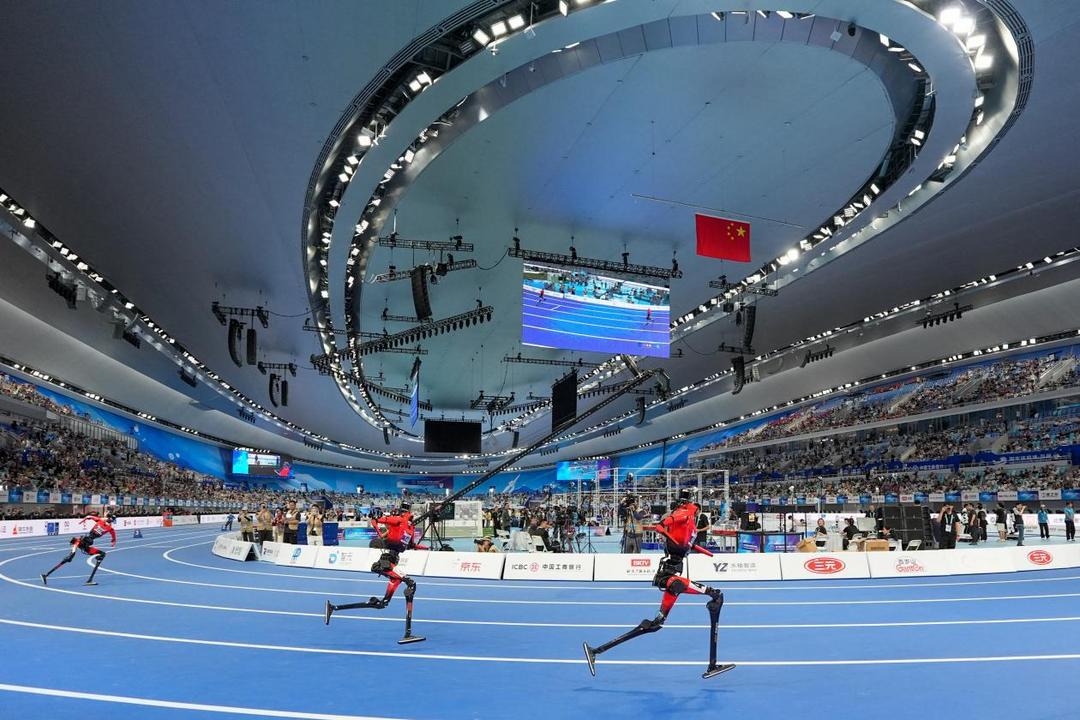
In this context, the concept of “drone racing” as a form of non-contact warfare reveals a sobering realism. Since existence may be illusory, at least let destruction stay away from flesh and blood. Like replacing real bullets with virtual battles in video games, drone warfare does not eliminate conflict, but offers a relatively low-risk solution for a potentially simulated world, limiting destruction to machines and data rather than consuming real lives. This is not a celebration of war, but a technological demotion of the absurdity of traditional warfare.
The simulation hypothesis transcends empirical verification, as Carnap would say, evading the final judgment of science. Yet philosophy has not ceased to respond. Pragmatist William James argued that as long as the “causal efficacy” of the simulated world remains stable—apples still fall, fire still burns—then “reality” is simply an “effective belief” in our actions. Phenomenology, echoing Husserl’s call to “return to the things themselves,” transforms into a pure description of experiential structures, regardless of their ontological foundations. Our experience *now* is the only reality.
The simulation hypothesis does not mark the end of existence, but invites us to understand it in a new dimension. Heidegger said, “The question of the being of beings is itself a way of being.” Even if human consciousness is merely recursive code, the very act of doubting our origin, reflecting on the horrors of war, and seeking paths to peace—this self-reflective questioning establishes our real “secondary ontological status” in a possibly nihilistic universe.
In the wake of the realization that the universe may be an illusion, the true courage of civilization is not to obsess over absolute proof of “existence,” but to build a world with less suffering through humility. When drones replace trenches filled with blood and flesh on the battlefield, it is not merely a technological upgrade—it is a profound redemption of the value of “existence.” Even if we are but phantoms in a program, we must still imbue this phantom with algorithms of dignity.
July 23, 2025
Peng Pei (Cultural Committee Member, Central Committee of China Zhi Gong Party)
Suppose you and I are nothing but code, and Earth is merely a projection of cold, impersonal instructions. In this moment, the sensation of your fingertips, the words before your eyes, the beating heart in your chest—could they all be nothing more than an elaborate illusion? This is the ultimate question posed by the simulation hypothesis. It is not mere science fiction; it is a serious philosophical inquiry that traces its lineage back to Descartes’ “evil demon” argument and Putnam’s “brain in a vat,” reaching its logical apex in Bostrom’s “simulation trilemma”: it is highly probable that we are living inside a program run by a posthuman civilization. In truth, *we do not exist at all*.
Let us begin with epistemology. Descartes’ famous “I think, therefore I am” no longer holds firm in a simulated universe. If all perception can be programmed, “I think” might simply be a clever response generated by the system. Kant believed that “space and time” are the foundation of experience, but if they are merely initial parameters of the simulator, we are trapped in a cage from which we can never reach the essence of things.
Turning to ontology, Aristotle’s concept of “material cause” collapses before the stream of bits. Berkeley’s “to be is to be perceived” becomes “to be is to be computed,” transforming the material world into a structured illusion of consciousness. Max Tegmark’s Mathematical Universe Hypothesis goes even further, suggesting that only mathematical structures are real, and we are merely programmed instances within them.
Ethical dilemmas follow. If pain is only a simulated neural signal, does morality still matter? Bostrom warns that if advanced civilizations possess moral conscience, the simulation we inhabit may be more likely to exist, because they would avoid creating suffering "conscious programs." Nozick’s “experience machine” paradox also evolves: does the simulator have the right to terminate the program? Can the simulated demand “consciousness upgrades”?
When existence itself hangs by a virtual thread, the absurdity of grand wars in human history—fought with mountains of corpses and gambled with millions of lives—becomes as evident as a microscopic view of bacteria squabbling. If you and I are code, the contested territories are virtual coordinates, the defended beliefs are pre-scripted narratives, and the thunder of artillery and mutual annihilation are merely logical errors in the program.
In this context, the concept of “drone racing” as a form of non-contact warfare reveals a sobering realism. Since existence may be illusory, at least let destruction stay away from flesh and blood. Like replacing real bullets with virtual battles in video games, drone warfare does not eliminate conflict, but offers a relatively low-risk solution for a potentially simulated world, limiting destruction to machines and data rather than consuming real lives. This is not a celebration of war, but a technological demotion of the absurdity of traditional warfare.
The simulation hypothesis transcends empirical verification, as Carnap would say, evading the final judgment of science. Yet philosophy has not ceased to respond. Pragmatist William James argued that as long as the “causal efficacy” of the simulated world remains stable—apples still fall, fire still burns—then “reality” is simply an “effective belief” in our actions. Phenomenology, echoing Husserl’s call to “return to the things themselves,” transforms into a pure description of experiential structures, regardless of their ontological foundations. Our experience *now* is the only reality.
The simulation hypothesis does not mark the end of existence, but invites us to understand it in a new dimension. Heidegger said, “The question of the being of beings is itself a way of being.” Even if human consciousness is merely recursive code, the very act of doubting our origin, reflecting on the horrors of war, and seeking paths to peace—this self-reflective questioning establishes our real “secondary ontological status” in a possibly nihilistic universe.
In the wake of the realization that the universe may be an illusion, the true courage of civilization is not to obsess over absolute proof of “existence,” but to build a world with less suffering through humility. When drones replace trenches filled with blood and flesh on the battlefield, it is not merely a technological upgrade—it is a profound redemption of the value of “existence.” Even if we are but phantoms in a program, we must still imbue this phantom with algorithms of dignity.
July 23, 2025
责任编辑:
相关阅读

东盟-中国工商总会创会于泰国,是扎根曼谷、辐射东盟十国的跨境商协会联盟,由会长杨天华博士牵头,在泰、马、新、印尼、越、柬等成员国设分会。
2026-09-16 10:51:09
费孝通所言的熟人社会,曾是我国传统社会底色。随着工业化、数字化推进,叠加文化交融与代际观念变迁,人情秩序正逐步退出公共领域。本文从生产力发展视角,辩证剖析熟
2026-09-15 15:57:00

国运升降,系于认知启闭;民族兴衰,决于革新进退。晚清遭遇三千年未有之大变局,表面观之是国力与器物落后,根源却在于思想封闭、体制僵化。自李鸿章倡洋务以求自强,戊戌志士
2026-09-13 09:57:34

患本是同盟,病痛才是共同敌人,唯有彼此体谅,方能共护生命安康。
迭代治理体系,适配时代变局。紧跟社会发展,补齐医疗纠纷处置、网络涉医舆情治理、双向权益保障的制度短板,
2026-09-11 13:07:09

回溯我国“养儿防老”传统与西方“放手育人”理念生成的底层逻辑,辩证剖析二者利弊得失,倡导构建兼顾个体独立人格与亲情伦理责任的现代养育观,对调适当代代际关系、涵养新时代文明家风,具有现实借鉴
2026-08-27 18:41:14

本报特约评论员 丨陈启明 放眼今日中国广袤乡村,一股发自民间、源于乡土、热于基层的助学奖学、奖教兴教浪潮,正席卷大江南北。各村各镇、各族各姓,依托家族宗亲会、村庄理事
2026-08-23 18:43:49

头条阅读